
1. THE BIG PICTURE — The reality
The Ideal Candidate… or a Superhero in Disguise?
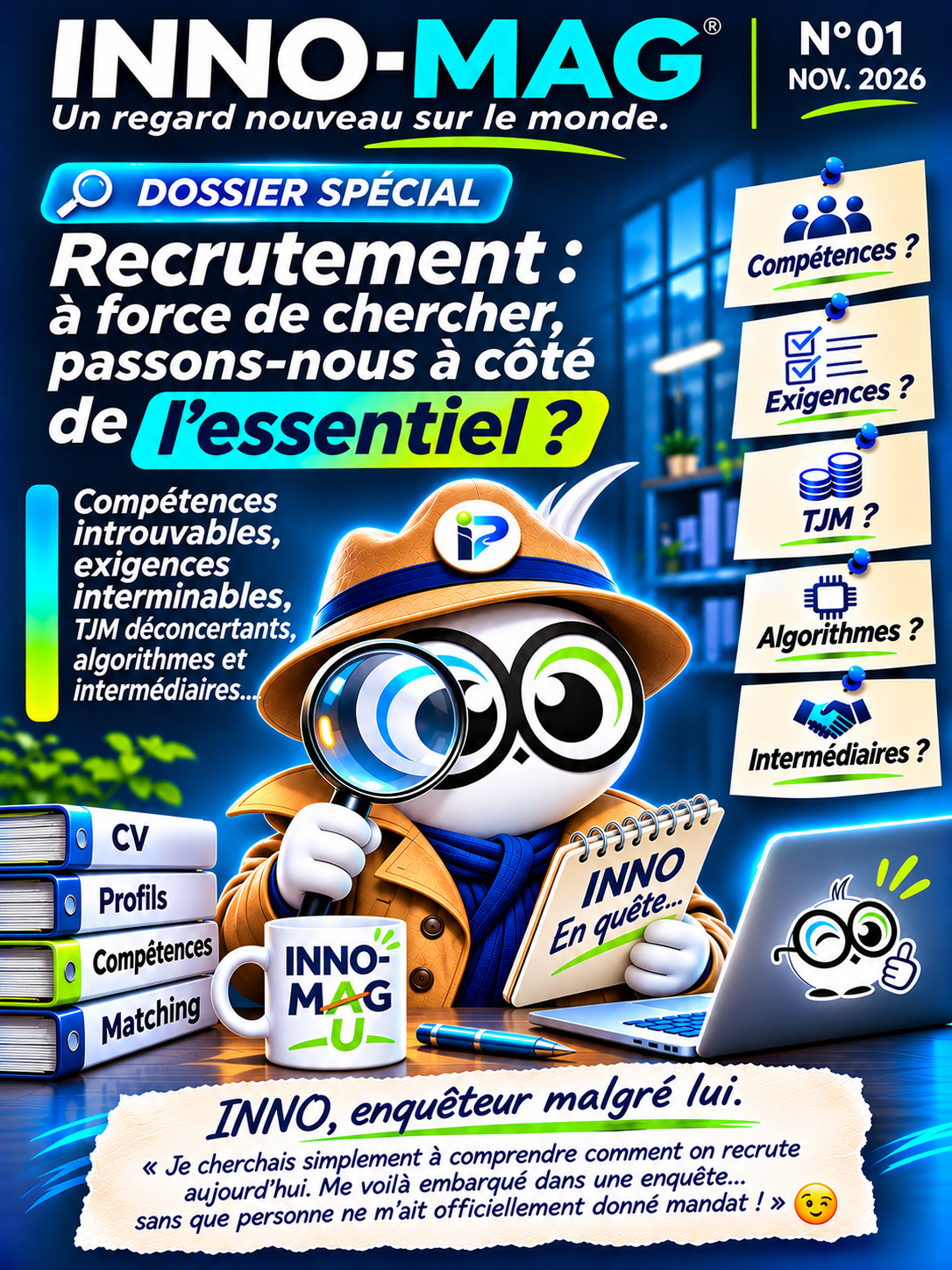
All I wanted was to understand how recruitment works these days. Somehow, I've found myself conducting an investigation… without anyone officially appointing me! No matter. I've promoted myself to chief investigator — in the interests of humanity, naturally! 😉🔎
On one side, businesses looking for talent. On the other, candidates and freelancers seeking opportunities. In between, recruiters, intermediaries, platforms and algorithms, all supposedly making it easier for the two sides to meet.
On paper, it should all work beautifully.
And yet…
I come across job adverts that read like exhaustive inventories of skills, demand experience in every conceivable discipline and describe assignments that would take several people to deliver.
And the successful candidate must be available immediately. That familiar little word: “ASAP”!
It makes me wonder: are we looking for the right professional to deliver an assignment, or a superhero who knows everything, can do everything and can start tomorrow morning?
What if our search for the perfect candidate is making us overlook the right one?
2. UNDER THE MICROSCOPE — The contradictions
When requirements obscure what really matters
Some job descriptions are so detailed that I wonder whether the employer is seeking one professional or trying to squeeze an entire team into a single CV.
Others are so vague that it is difficult to establish the assignment, the responsibilities or even the outcome expected.
Then there is the relentless urgency: vacancies advertised as “ASAP”, sometimes still online weeks later.
I also notice opportunities that circulate, disappear and then reappear. Are they all genuinely approved requirements? Or are some intended to anticipate future business or build candidate pools?
There is nothing necessarily wrong with these practices. But surely they should be clearly identified.
When algorithms meet… or miss each other
Artificial intelligence is reshaping recruitment too.
Candidates use tools to optimise their CVs and applications. Recruiters use other tools to search, screen and shortlist profiles.
Automation can save considerable time. But when it becomes the main gatekeeper, it can also exclude unconventional career paths and abilities that cannot be reduced to a handful of keywords.
And then a thought occurs to me:
“Could we not simply introduce the two algorithms and let the humans have a coffee? Who knows… between them, they might finally create that elusive superhero!”
3. BEYOND THE HEADLINES — What's really at stake
When a checklist replaces a clear brief
The more adverts I examine, the more one contradiction stands out.
The issue is not how many skills are requested, but whether they are genuinely relevant to the assignment. As requirements multiply, the essential question can disappear: what must this person actually achieve?
Without that clarity, everyone fills in the gaps. The client, intermediary and candidate each interpret the brief through the lens of their own expectations and constraints.
The result? Everyone thinks they are discussing the same requirement — but not necessarily the same assignment.
And the consequences reach everyone involved.
For candidates, it means time spent pursuing poorly defined opportunities, unanswered applications and a growing sense of frustration.
For recruiters, it means more profiles to assess, more criteria to interpret and more difficult judgements to make.
For businesses, it means longer recruitment cycles, skills that remain difficult to secure and, at times, delayed projects.
And somewhere along the way, trust begins to erode.
Intermediary or adviser? The distinction matters
Another striking development is the growing number of recruitment intermediaries and platforms.
Connecting a business with a candidate is one thing. Understanding the requirement, challenging the client’s assumptions and offering meaningful advice is quite another.
Yet some intermediaries appear content to forward profiles that match a checklist, without questioning whether the checklist itself makes sense.
How can you advise a client without a sound understanding of the professions, skills and market realities involved?
A good intermediary does more than check whether a candidate ticks every box. They can explain why some of those boxes deserve to be reconsidered.
That advisory role becomes particularly valuable when the brief must be reconciled with the skills available — and the budget on offer.
To my mind, an intermediary’s value lies not in the number of CVs submitted, but in their ability to help clients make better decisions.
Day rates: market reality… or guesswork?
Another contradiction catches my attention: how daily rates are set.
Some assignments call for specialist expertise, substantial experience and significant responsibility — yet offer a day rate seemingly far removed from market norms.
Of course, businesses have legitimate budget constraints. Rates also vary according to the assignment, its duration and its circumstances.
But some day rates appear to have been set arbitrarily, with little explanation or apparent regard for the market.
Which raises a question: how can we demand high-level expertise while offering terms that fail to reflect its value?
A budget is a legitimate constraint. It must still be consistent with the skills and responsibilities required.
AI: an accelerator, not a substitute for judgement
I do not see artificial intelligence as the enemy of recruitment.
Used well, it can help identify skills, assess applications and free up time for more meaningful conversations.
But it cannot, on its own, repair an ill-defined brief, inconsistent criteria or a damaged relationship of trust.
Automating a process does not make it a good process.
Technology can make introductions easier. It cannot replace an understanding of what each party genuinely needs.

4. INNO'S TAKE — A more sensible way forward
Getting back to what matters
Having examined these contradictions, I began to wonder how we might make things simpler.
Not by adding yet another tool or process.
But by establishing a shared framework to help businesses, recruiters and candidates understand one another.
- QUESTION 01
Is the requirement genuine and approved?
Is this an approved and funded assignment, a conditional requirement or a potential future opportunity?
These are different situations and deserve to be described transparently.
- QUESTION 02
What is the assignment actually meant to achieve?
Beyond the job description, what tangible outcome is expected of the person hired?
- QUESTION 03
Which three skills are genuinely critical?
The three capabilities essential to delivering the assignment successfully.
- QUESTION 04
Which four areas of technical or business knowledge are essential?
The point is not to impose rigid quotas, but to distinguish essential knowledge from what can be learned.
- QUESTION 05
Do the responsibilities, experience and budget align?
The expertise expected, responsibilities involved and proposed remuneration or day rate should form a credible whole.
Putting the framework into practice
I am not suggesting that five questions will solve every recruitment challenge.
But they could be a useful starting point.
Clarify requirements. Separate essentials from preferences. Be transparent about opportunities. Advise both parties more effectively. And put human dialogue back at the heart of the process.
In short: less mechanical matching, more meaningful connections.

5. INNO'S PARTING SHOT — So What?
I do not believe every candidate is too demanding, every recruiter out of touch or every business obsessed with finding the ultimate all-rounder.
The problem is not always a shortage of skills, but a failure to define which skills genuinely matter. Requirements pile up, processes become more complicated and genuine conversation takes a back seat.
Behind every application is a person with experience, skills and aspirations. Behind every recruitment decision is an organisation with a real need, objectives and responsibilities.
So let us return to first principles: define the need precisely, distinguish essentials from nice-to-haves, offer credible terms and make time for a proper conversation.
“We do not hire a checklist of skills. Nor do we hire a CV. We hire a person — and everything they can contribute to a shared endeavour.”
There you have my analysis and conclusions, drawn from my investigation, observations and convictions. Now I would like to hear yours!
I rather enjoy being proved wrong… provided the arguments are good! 😉
OVER TO YOU!
Candidates, freelancers, recruiters, intermediaries and businesses: I invite you to share your experiences and challenge one another’s perspectives.
Your responses will help shape the next stage of this investigation.